Love Wins the Eurovision Song Contest
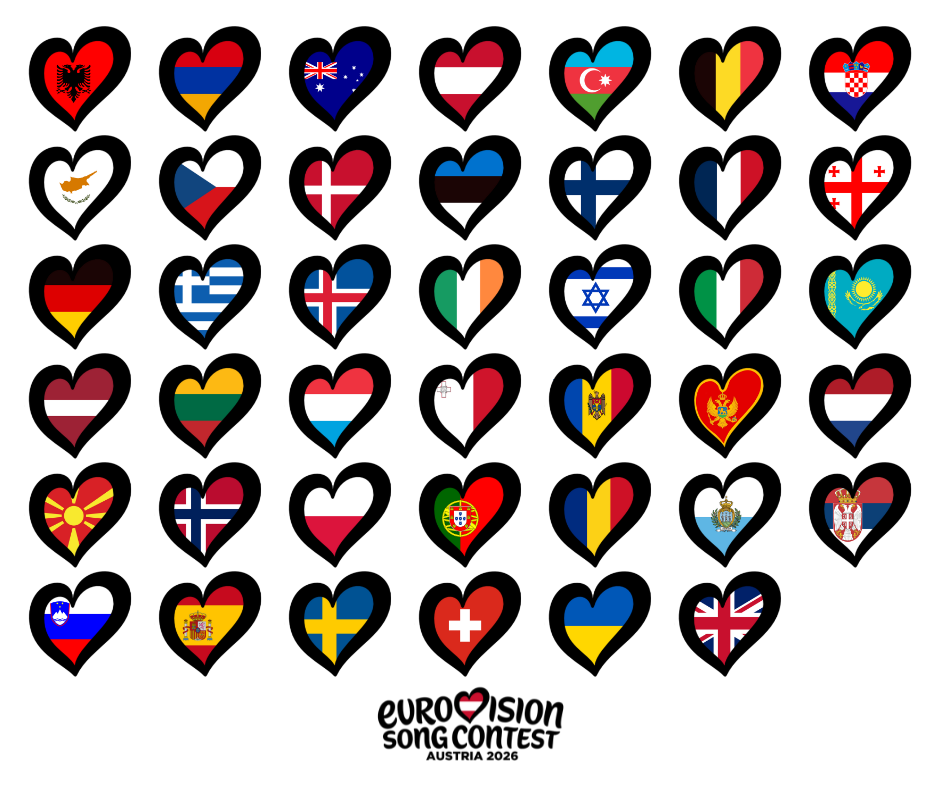
Probably like a lot of other people, I’ve tended to ignore the loud Euro-pop frenzy that is the Eurovision Song Contest. But this year I decided to watch – mostly because my partner loves it and I wanted to join him in what he loves. Well, I say I watched it. I took in as much of the repetitive sounds and flashing lights as I could bear and retreated into the kitchen or my (worthy) book when I needed to. Still, moments of camp spectacle did make me smile. There is something very special about an international arts gathering that has come to emphasise frivolity, play and (queer) joy. While major sporting events often have their share of violent fans, this simply isn’t the case at Eurovision. Why is that? Maybe because winning isn’t taken so seriously. Everyone just wants to have fun.
And yet casting a shadow over the whole event was the question of participation by Israel despite widespread protest for their government’s genocide against the people of Palestine and now other countries in the region as well. I was deeply captivated at the end as the question came – would Israel win? It was looking very possible that they might which could give credence to the belief that the people of Europe support the actions of the State of Israel.
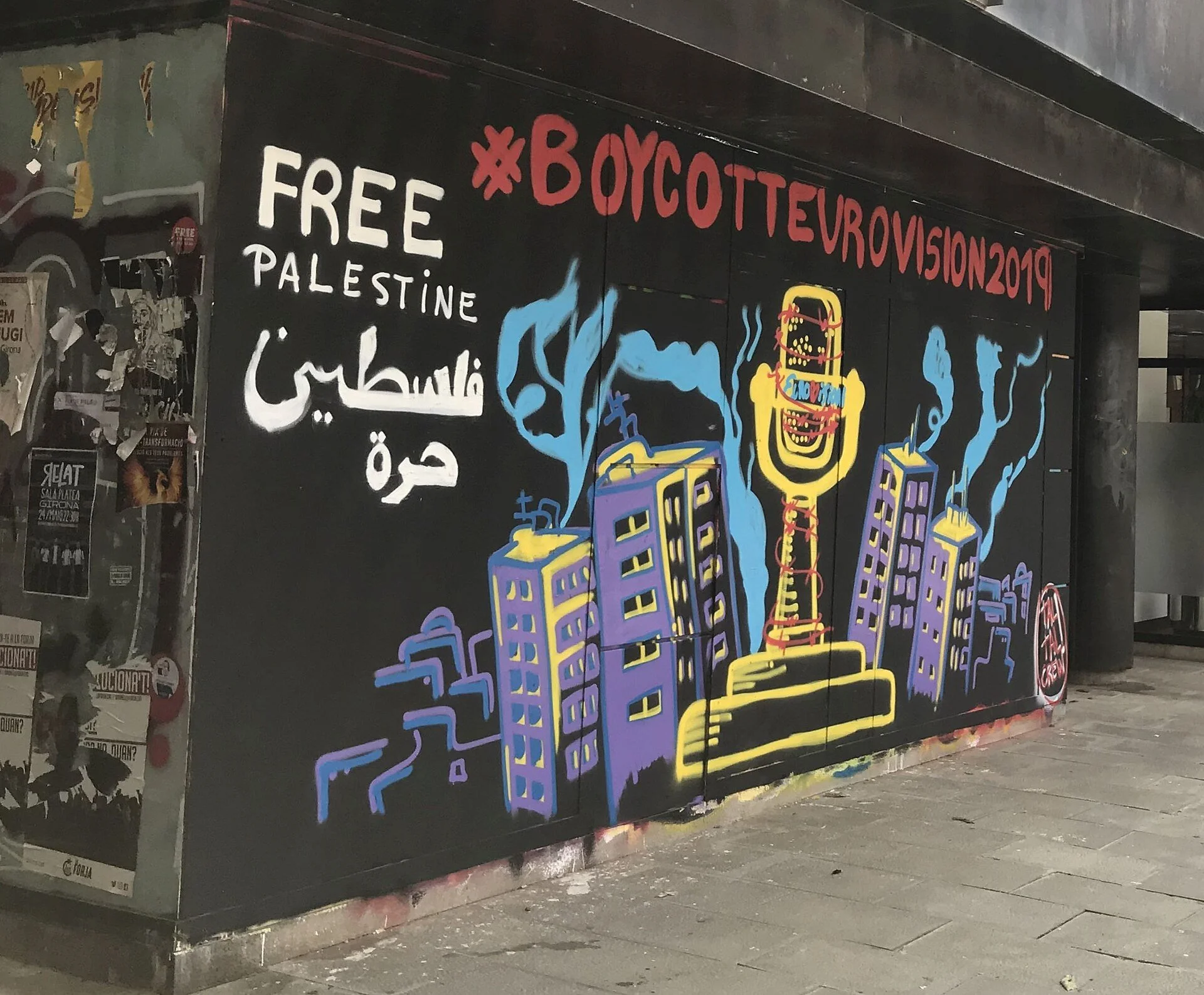
It was pointed out to me, being naive about Eurovision, that people anywhere in the world can now vote, including Americans who are subject to a great deal of pro-Israel propaganda. A little searching reveals a New York Times investigative article highlighting how the Israeli State has been using Eurovision as a tool for soft power. The NYT writes:
“Israel’s efforts to influence Eurovision’s vote were broader and started years earlier than previously known. Even before the voting controversy burst into view, financial records show, Israel spent at least $1 million on Eurovision marketing. Some of that money came from Mr. Netanyahu’s “hasbara” office, a euphemism for overseas propaganda, to promote Israel’s singer.”
Clearly, Netanyahu isn’t playing a part in Eurovision for the fun of it. He is out to be a winner and to make others into losers, as the Guardian notes. As we all know, many people are losing their homes, their livelihoods, and their lives because of this desire to be the winner and the fear of loss that fuels it.
I’m reminded of a poem by the great Muslim mystic Hafiz from 14th century Persia (now known as Iran) who wrote:
“I have come into this world to see this:
the sword drop from men’s hands
even at the height of their arc of rage
because we have finally realised
there is just one flesh
we can wound.”
He understood that ultimately, there are no winners and losers. There is only harming or healing. It’s easy, watching the news these days, to imagine there is no hope of healing for humanity. But if we look elsewhere, there are signs of it everywhere. Including on Eurovision.
DARA from Bulgaria ‘defeated’ the singer from Israel at the last minute with her pop song Barangara, winning both the jury vote and the popular vote – a rare event. Before the win was announced, she told us that worrying about winning wasn’t her job. That was up to others. All she needed to do, she tell us, is keep her heart chakra open and play her part on the stage. In another interview, she says:

DARA celebrating. Photo from artist’s instagram page.
“Barangara is this inner feeling that everything is going to be all right and that everything is possible. I’ve been having a battle with anxiety and one thing that helped me was having this inner conversation with myself and asking myself, ‘What’s my value?’ And I found that being who you are and staying authentic to who you are is the most powerful thing. And being bold.”
“I think everyone can awaken this feeling,” she says, touching her heart, “of just, you know what? I’m not doing this for somebody else’s approval. I’m doing it because that’s me.”
I think a lot of us can relate to this experience of anxiety in a rapidly changing world and wondering how we might be able to contribute. And personally, I’ve seen a lot of people helped by doing what she’s advising here. Shifting focus from the worrying mind into what the Buddhists call the awakened heartmind. Here, in the heart, there is no fear of loss, no need to control. We can simply be ourselves and play our small part in the larger picture.
So for anyone of us wondering what we can do to help right now, we might simply ask ourselves, ‘What makes my heart sing?” And, “could I make more space for that in my life?”
And who knows, maybe someone you know will be singing for Scotland on the Eurovision Song Contest stage one day, not caring at all whether they win or not.
Originally published by Bella Caledonia